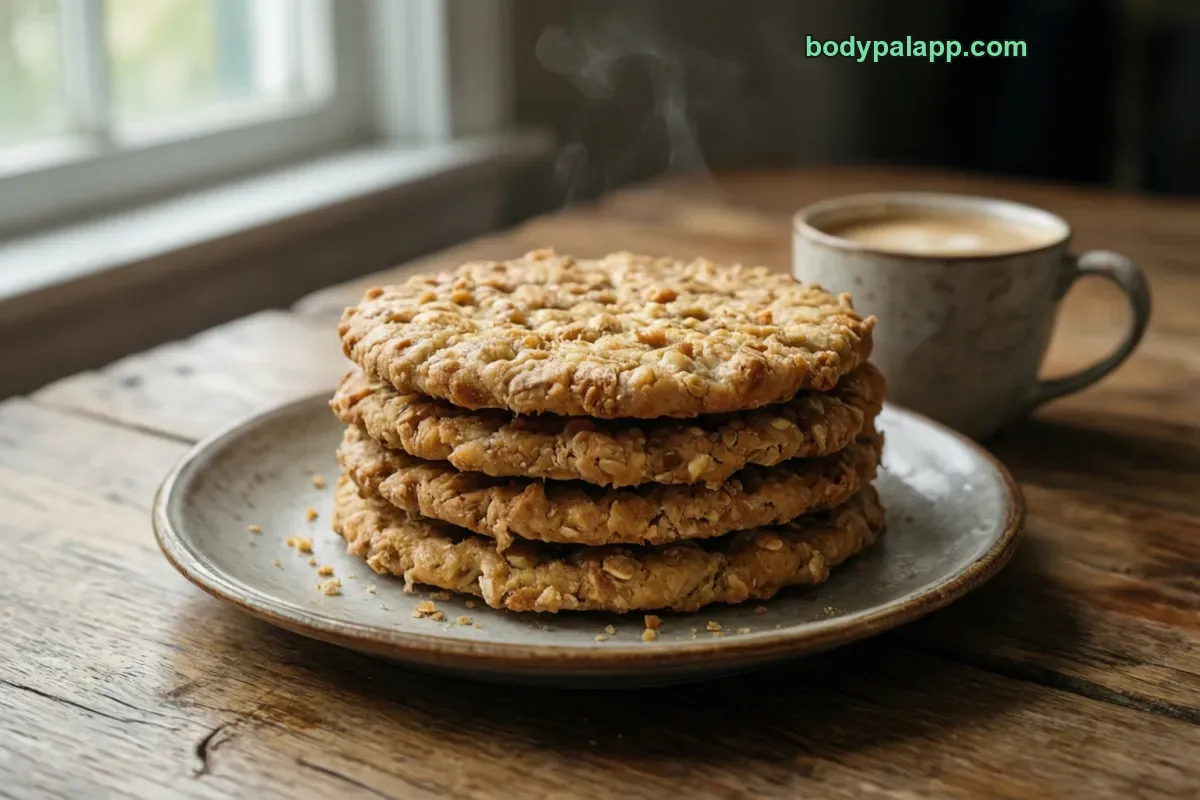
Breakfast biscuits calories come to 64 for one 15 g biscuit and 427 per 100 g. A 4-biscuit pack (50 g) lands at 230. Look at the energy split: 63% of the calories come from carbs and only 6% from protein, so these crunchy biscuits work as a carb snack and not as a filling breakfast on their own.
64kcal
1 biscuit · 15 g, packaged, crunchy
6%protein
1.1 gProtein
11 gCarbs
2.3 gFat
How to burn off 64 kcal
—Walking, brisk
—Jogging
—Cycling, moderate
—Swimming
Skip the math. BodyPal counts these calories from your steps and workouts automatically.
Nutrition facts
Packaged, crunchy · per 15 g
Calories
64 kcal
Protein
1.1 g
Carbohydrate
10.6 g
Fat
2.3 g
Saturated fat
0.3 g
Cholesterol
0 mg
Sodium
65 mg
Potassium
41 mg
Iron
0.6 mg
Source: USDA FoodData Central
🛡️
Verified nutrition data
Numbers on this page come from USDA FoodData Central, the U.S. Department of Agriculture’s food composition database, and from manufacturer labels where a branded product is named. Last verified October 2026. How we verify our data →
Breakfast biscuit: calories, protein and sodium by serving
Percent of daily value uses the FDA reference of 2,000 kcal a day.
Serving
kcal
Protein
Carbs
Fat
Sodium
% DV kcal
1 biscuit (15 g)
64
1.1 g
10.6 g
2.3 g
65 mg
3%
1 pack, 4 biscuits (50 g)
230
3 g
36 g
8 g
210 mg
12%
100 g
427
7.1 g
71 g
15.1 g
430 mg
21%
3 × 1 biscuit (15 g)
192
3.2 g
194 mg
5 × 1 biscuit (15 g)
320
5.3 g
323 mg
A 4-biscuit pack is a 230-calorie snack
One biscuit (15 g) has 64 calories, about 3% of the daily value. That sounds small, and it is, but nobody eats one. Two biscuits come to 128 calories, three reach 192, and five climb to 320. The total moves in steps of 64, so counting biscuits is the easiest way to keep track.
Most people eat breakfast biscuits straight from the pack. A standard pack of 4 biscuits weighs 50 g and carries 230 calories, 12% of the daily value. Pack biscuits are a little lighter than the 15 g reference biscuit, which is why the pack total is lower than four loose biscuits would suggest. Check the weight on the wrapper, not just the count.
Scale it up and the density shows. A full 100 g holds 427 calories, 21% of the daily value, which is more than many people expect from something sold as breakfast. If you snack from a larger box instead of single packs, 75 g of biscuits (five of them) already costs 320 calories.
Carbs supply 63% of the calories
Per 100 g, breakfast biscuits have 71 g of carbs, 15.1 g of fat and 7.1 g of protein. In calorie terms that is 63% carbs, 30% fat and just 6% protein. This is a grain snack through and through.
Fat is moderate, and most of it is not saturated: 2.2 g of saturated fat per 100 g. Cholesterol is 0. One biscuit carries 2.3 g of fat and 10.6 g of carbs, while a pack brings 8 g of fat and 36 g of carbs.
Protein is the weak spot. One biscuit gives 1.1 g, about 2% of the daily value, and even a full pack offers only 3 g, or 6%. If you count on breakfast to carry a real share of your protein, these biscuits will not do it alone.
Sugar outweighs fiber three to one
Breakfast biscuits do carry real fiber: 7.3 g per 100 g, which is 1.1 g per biscuit and 3 g per pack. That is more than plain crackers usually offer, and it comes from the whole grains and oats these biscuits are built on.
Sugar is the row to watch. There are 22.8 g of sugars per 100 g, 3.4 g in one biscuit and 13 g in a pack. So a single pack holds more than four times as much sugar as fiber by weight. Flavored versions like Belvita Blueberry or Chocolate Crunchy lean sweet, while Golden Oat reads plainer on the label, so compare wrappers if sugar matters to you.
Sodium is moderate. A biscuit has 65 mg and a pack 210 mg, 9% of the daily value. Per 100 g that is 430 mg, 19% of the daily value. If you watch sodium, it is not a dealbreaker, but it adds up when you eat several packs a day.
Pair it with protein to make it breakfast
On its own, a 230-calorie pack is mostly carbs with 3 g of protein. That makes it a quick, portable bite, not a complete meal. The fix is simple: add something with protein next to it, such as yogurt, milk, eggs or a handful of nuts.
Breakfast biscuits fit best as a planned snack or as one part of a morning meal. Keep them in single packs rather than an open box, since the portion is already counted for you. If you need a lighter bite, one or two biscuits at 64 or 128 calories cover a coffee break without much effect on your day.
Flavors like Belvita Gingerbread, Vanilla Oat or Pumpkin Spice taste different but sit in the same snack category, so the pack is still the unit to count. BodyPal can log a pack from a photo, which keeps the number honest when you eat on the go.
How does breakfast biscuit compare?
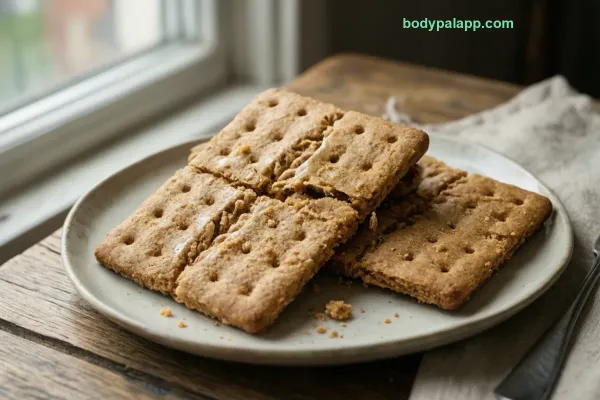
Here is how breakfast biscuits stack up against tea biscuits, graham crackers and butter biscuits, per 100 g and per usual serving.
Verdict: Per 100 g, breakfast biscuits at 427 calories sit just under tea biscuits at 446 and graham crackers at 430, and they carry less sodium than graham crackers at 516 mg or butter biscuits at 580 mg. For the smallest bite pick a single tea biscuit at 22 calories; for a fuller snack, a 230-calorie pack of breakfast biscuits costs about the same as a 212-calorie butter biscuit with less sodium per 100 g.
Most popular breakfast biscuit brands in the United States
About 64 calories in one 15 g breakfast biscuit. A 50 g pack of 4 biscuits is 230 calories on the label.
Are breakfast biscuits good for weight loss?
They are calorie dense at 427 calories per 100 g, with 7.3 g of fiber and 22.8 g of sugar per 100 g. One biscuit is 64 calories.
Breakfast biscuits vs graham crackers: which has fewer calories?
They are almost the same: breakfast biscuits have 427 calories per 100 g and graham crackers 430.
How much sugar is in breakfast biscuits?
About 3.4 g of sugar per biscuit (15 g), or 22.8 g per 100 g. A 50 g pack lists 13 g of sugar.
How many calories are in a pack of breakfast biscuits?
A 4-biscuit pack (50 g) has 230 calories, about 12% of the daily value. It also brings 36 g of carbs, 8 g of fat, 3 g of protein and 13 g of sugars.
How much protein is in breakfast biscuits?
One biscuit has 1.1 g of protein and a pack has 3 g, just 6% of the daily value. Protein supplies only 6% of the calories, so treat them as a carb snack, not a protein source.
How much sodium do breakfast biscuits have?
A pack has 210 mg of sodium, 9% of the daily value, and one biscuit has 65 mg. Per 100 g that is 430 mg, lower than graham crackers at 516 mg.
Do breakfast biscuits have fiber?
Yes. Breakfast biscuits have 7.3 g of fiber per 100 g, which works out to 1.1 g per biscuit and 3 g per 4-biscuit pack.
Breakfast biscuits vs tea biscuits: which has fewer calories?
Per 100 g, breakfast biscuits have 427 calories and tea biscuits 446, nearly the same. A single tea biscuit (4.9 g) is only 22 calories against 64 for a 15 g breakfast biscuit, so portion size makes the difference.