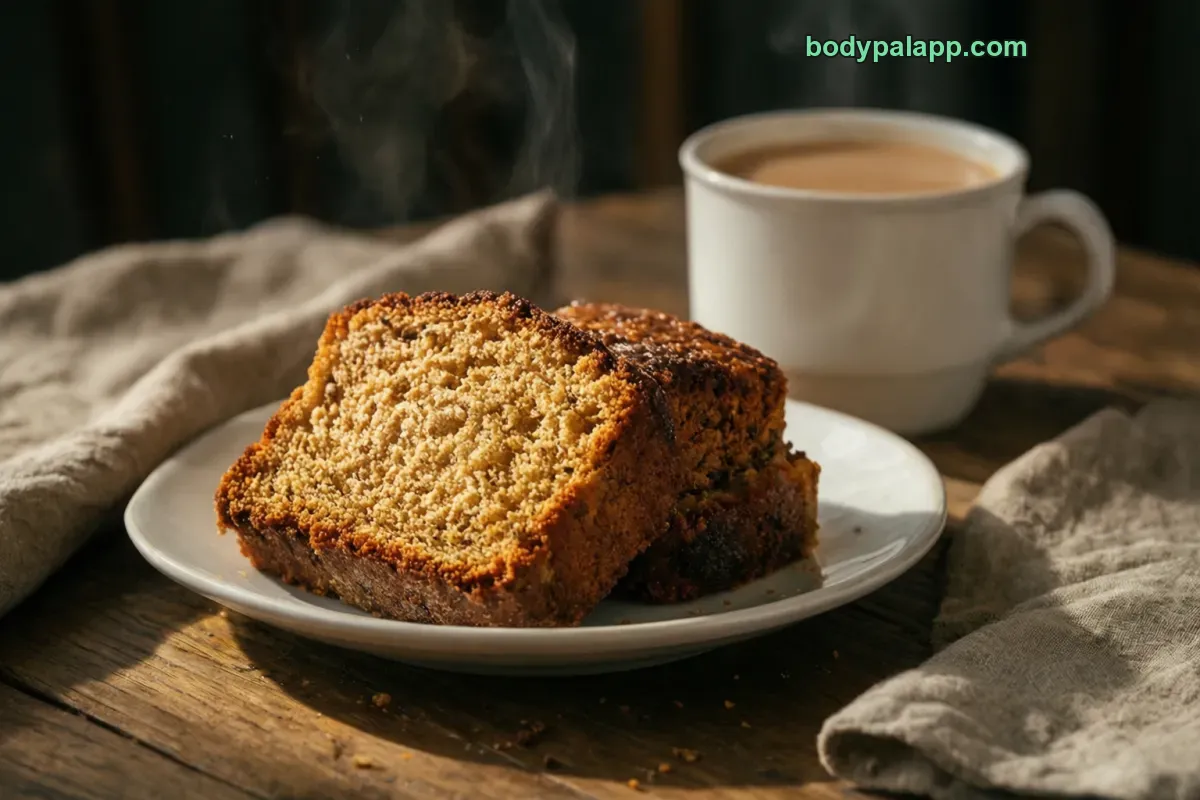
Cake rusk calories come to 41 for one 10 g rusk and 407 per 100 g. The piece is light, but the food is dense: a twice-baked rusk has had most of its water driven out, so the energy per gram is high and the total climbs quickly once a second and third rusk follow the first into your tea.
41kcal
1 rusk · 10 g, twice baked rusk toast
13%protein
1.4 gProtein
7 gCarbs
0.7 gFat
How to burn off 41 kcal
—Walking, brisk
—Jogging
—Cycling, moderate
—Swimming
Skip the math. BodyPal counts these calories from your steps and workouts automatically.
Nutrition facts
Twice baked rusk toast · per 10 g
Calories
41 kcal
Protein
1.4 g
Carbohydrate
7.2 g
Fat
0.7 g
Saturated fat
0.1 g
Cholesterol
8 mg
Sodium
25 mg
Potassium
25 mg
Iron
0.3 mg
Source: USDA FoodData Central
🛡️
Verified nutrition data
Numbers on this page come from USDA FoodData Central, the U.S. Department of Agriculture’s food composition database, and from manufacturer labels where a branded product is named. Last verified September 2026. How we verify our data →
Cake rusk: calories, protein and sodium by serving
Percent of daily value uses the FDA reference of 2,000 kcal a day.
Serving
kcal
Protein
Carbs
Fat
Sodium
% DV kcal
1 rusk (10 g)
41
1.4 g
7.2 g
0.7 g
25 mg
2%
1 oz portion (28 g)
114
3.8 g
20.2 g
2 g
71 mg
6%
100 g
407
13.5 g
72.3 g
7.2 g
253 mg
20%
3 × 1 rusk (10 g)
122
4.1 g
76 mg
5 × 1 rusk (10 g)
204
6.8 g
127 mg
Three rusks make a 122-calorie snack
A single rusk weighs 10 g and carries 41 calories, just 2% of the daily value used on nutrition labels. That is small. The catch is that few people stop at one with a cup of tea, and rusks are light enough that a handful barely registers.
Two rusks bring 81 calories, three bring 122, and five reach 204. A 1 oz portion of 28 g lands at 114 calories, roughly what three pieces give you. Counting pieces works better than eyeballing a plate, because the dry, airy crumb hides how much you have actually eaten.
Protein moves along slowly: 1.4 g in one rusk, 4.1 g in three, 6.8 g in five. If you want a snack that carries you to the next meal, the rusk alone will not do much of that work. Logging by the piece keeps the count honest, and BodyPal can log cake rusk from a photo of your plate.
Carbs supply 71% of the calories
Cake rusk is a carbohydrate food first. Per 100 g it holds 72.3 g of carbs, 13.5 g of protein and 7.2 g of fat, so carbs supply 71% of the calories, fat 16% and protein 13%. That is the profile of a dried bread product, not a rich pastry.
Fat stays modest at 7.2 g per 100 g, with 1.4 g of it saturated. Per rusk that is 0.7 g of fat, a minor line on most days. The name says cake, but the numbers do not: lemon cake carries 13.5 g of fat per 100 g, nearly twice what a rusk does.
Protein is the pleasant surprise. At 13.5 g per 100 g it covers 27% of the daily value in that amount, though a single rusk delivers only 1.4 g, or 3%. The protein is real, but you only collect a meaningful amount at portions where the calories also climb.
Sodium stays low, cholesterol is the odd row
Sodium is not the problem here. One rusk has 25 mg, 1% of the 2300 mg daily value, and even five rusks total only 127 mg. Per 100 g the figure is 253 mg, or 11% of the daily value, in line with other baked crunchy snacks.
The row that stands out is cholesterol: 78 mg per 100 g, measured against a daily value of 300 mg. At 10 g per rusk the amount in one piece is small, but if you eat rusks by the handful and keep an eye on cholesterol, this is the line worth reading. Potassium sits at 245 mg per 100 g, a small share of the 4700 mg daily value.
The USDA entry behind this page, Crackers, rusk toast, does not list sugar or fiber. Sweeter cake rusks vary by recipe, so check the package if added sugar matters to you.
Pair rusks with protein, not more crunch
Rusks are made for dunking, and tea or coffee is the classic partner. What goes in the cup counts too: milk and sugar add to the total, so log them separately rather than forgetting them.
Because a rusk is mostly carbs with little fat, it pairs well with something that brings protein: a boiled egg, a pot of yogurt, a slice of cheese or a few nuts. That turns three rusks at 122 calories from a quick nibble into something closer to a small meal.
If you are tracking, decide the number of pieces before the packet opens. Two rusks at 81 calories fit almost any day; a whole sleeve eaten while scrolling is a different story. Plate them, put the packet away, and the numbers stay where you planned them.
How does cake rusk compare?
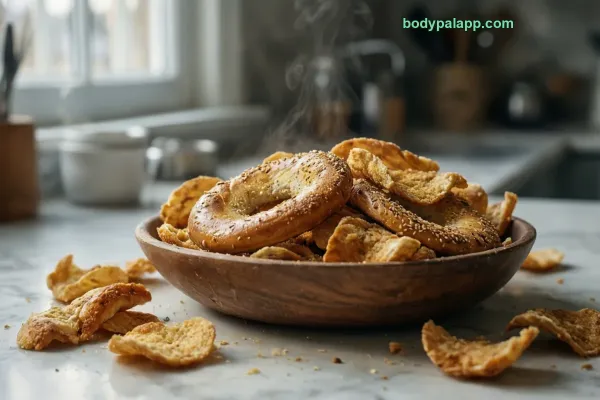
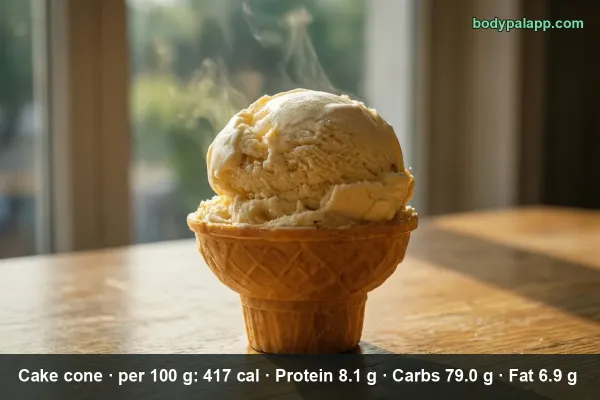
Here is cake rusk next to bagel chips, cake cone and lemon cake, per 100 g and per usual serving.
Verdict: For the lightest crunchy snack per serving, pick cake rusk: 41 calories a piece against 126 for a 28 g bag of bagel chips, which also carry 15.1 g of fat per 100 g. Lemon cake looks lighter at 339 per 100 g, but a 175 g slice runs 593 calories, so rusks are the smarter sweet bite with tea.
Cake rusk FAQs
How many calories are in one cake rusk?
One cake rusk weighs about 10 g and has 41 calories. Two rusks come to 81 calories.
Is cake rusk good for weight loss?
Cake rusk is dense at 407 calories per 100 g, but a single 10 g rusk adds 41 calories, so the count depends on how many are eaten.
Cake rusk vs cake cone: which has more calories?
Cake rusk has 407 calories per 100 g and a cake cone 417, a difference of only 10 calories per 100 g.
How much protein is in cake rusk?
Per 100 g cake rusk has 13.5 g protein, 72.3 g carbs and 7.2 g fat. One 10 g rusk gives 1.4 g protein.
How many calories are in two cake rusks?
Two cake rusks have 81 calories in 20 g. They also bring 2.7 g of protein and 51 mg of sodium, so a pair with tea is a light snack by any measure.
How many calories are in three cake rusks?
Three cake rusks come to 122 calories in 30 g. That is a little more than a 1 oz portion of 28 g, which has 114 calories, and it gives you 4.1 g of protein.
What are the nutrition facts for cake rusk?
Per 100 g, cake rusk has 407 calories, 72.3 g of carbs, 13.5 g of protein, 7.2 g of fat (1.4 g saturated), 253 mg of sodium and 78 mg of cholesterol. One 10 g rusk has 41 calories.
How many calories are in a plain rusk?
A 10 g rusk has 41 calories, and 100 g has 407, based on the USDA entry for rusk toast that this page uses. Sweeter or larger brand rusks can differ, so check the label for piece weight.