Oat bran calories come to 231 for 1 cup dry (94 g) and 246 per 100 g. Cooked, a cup weighs 219 g and holds just 88 calories, because water fills most of the bowl. The number worth noticing is fiber: 14.5 g in that dry cup, with almost no sodium or sugar.
231kcal
1 cup of dry oat bran · 94 g, dry, uncooked
17%protein
16.3 gProtein
62 gCarbs
6.6 gFat
How to burn off 231 kcal
—Walking, brisk
—Jogging
—Cycling, moderate
—Swimming
Skip the math. BodyPal counts these calories from your steps and workouts automatically.
Nutrition facts
Dry, uncooked · per 94 g
Calories
231 kcal
Protein
16.3 g
Carbohydrate
62 g
Fat
6.6 g
Saturated fat
1.2 g
Cholesterol
0 mg
Sodium
4 mg
Potassium
532 mg
Iron
5.1 mg
Source: USDA FoodData Central
🛡️
Verified nutrition data
Numbers on this page come from USDA FoodData Central, the U.S. Department of Agriculture’s food composition database, and from manufacturer labels where a branded product is named. Last verified October 2026. How we verify our data →
Oat bran: calories, protein and sodium by serving
Percent of daily value uses the FDA reference of 2,000 kcal a day.
Serving
kcal
Protein
Carbs
Fat
Sodium
% DV kcal
1 cup dry (94 g)
231
16.3 g
62.2 g
6.6 g
4 mg
12%
1 cup cooked (219 g)
88
7 g
25.1 g
1.9 g
2 mg
4%
100 g
246
17.3 g
66.2 g
7 g
4 mg
12%
3 × 1 cup dry (94 g)
694
48.8 g
11 mg
5 × 1 cup dry (94 g)
1,156
81.3 g
19 mg
A cooked cup is 88 calories, a dry cup is 231
The biggest swing in oat bran numbers comes from one word on the label: dry or cooked. A cup of dry oat bran weighs 94 g and carries 231 calories, about 12% of a 2000-calorie daily value. A cup of cooked oat bran weighs 219 g but delivers only 88 calories, because most of that weight is water.
That gap matters when you log. If you measure the dry flakes before cooking, use the 231 figure. If you scoop from the pot, the 88 figure fits. Mixing the two up is the most common way a bowl of oat bran gets logged wrong.
Dry portions add up fast if you bake with it. Two dry cups (188 g) come to 462 calories and 32.5 g of protein. Three cups (282 g) reach 694 calories, and a 470 g bag-sized batch of 5 cups lands at 1,156 calories. Spread across a tray of muffins, that total stays modest per piece; eaten as a giant bowl, it does not.
Carbs supply 67% of the calories, protein a solid 17%
Per 100 g, oat bran has 66.2 g of carbs, 17.3 g of protein and 7 g of fat. In calorie terms that splits into 67% carbs, 17% protein and 16% fat. It is a carb food, but a carb food with more protein than most grains.
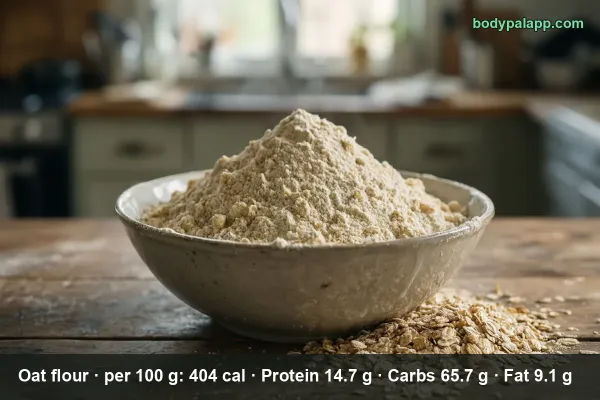
That protein is the quiet surprise. A dry cup gives 16.3 g, which covers 33% of the 50 g daily value. A cooked cup gives 7 g, or 14%. For comparison, rolled oats have 13.2 g of protein per 100 g and oat flour 14.7 g, so the bran edges out both.
Fat stays low and mostly unsaturated by default: 1.3 g of saturated fat per 100 g, against a daily value of 20 g. Sugars are just 1.5 g per 100 g and 1.4 g in a dry cup. Nearly all the carbs are starch and fiber, not sugar.
Fiber is the row that stands out
Oat bran is the outer layer of the oat groat, and the fiber numbers show it. Per 100 g it has 15.4 g of fiber. A dry cup holds 14.5 g, roughly half of the 28 g daily value in a single serving.
Cooked, a cup still gives 5.7 g of fiber for 88 calories. Few breakfast foods offer that much fiber for so few calories. If you are trying to raise your fiber intake without adding much to your calorie total, a cooked bowl is an easy place to start.
Potassium is worth a mention too: 566 mg per 100 g, measured against a daily value of 4700 mg. It is not the headline, but it adds to the case that oat bran is a dense base rather than filler.
Sodium starts near zero, so toppings set the total
Plain oat bran has 4 mg of sodium per 100 g and 4 mg in a dry cup, which rounds to 0% of the 2300 mg daily value. Cholesterol is 0. Whatever you add will define the final numbers far more than the bran itself.
Fruit, a spoon of nut butter, milk or yogurt all change the bowl in different ways. Nut butter adds fat and calories quickly; berries add volume with fewer calories; milk or yogurt raise the protein further. If you watch sodium, salted toppings and packaged mixes are the ones to check.
Brands like Bob's Red Mill Gluten Free Oat Bran and Hodgson Mill Organic Oat Bran Flour are sold as plain bran, so the base numbers here are a reasonable starting point. To keep the toppings honest, you can log the finished bowl in BodyPal from a photo.
How does oat bran compare?
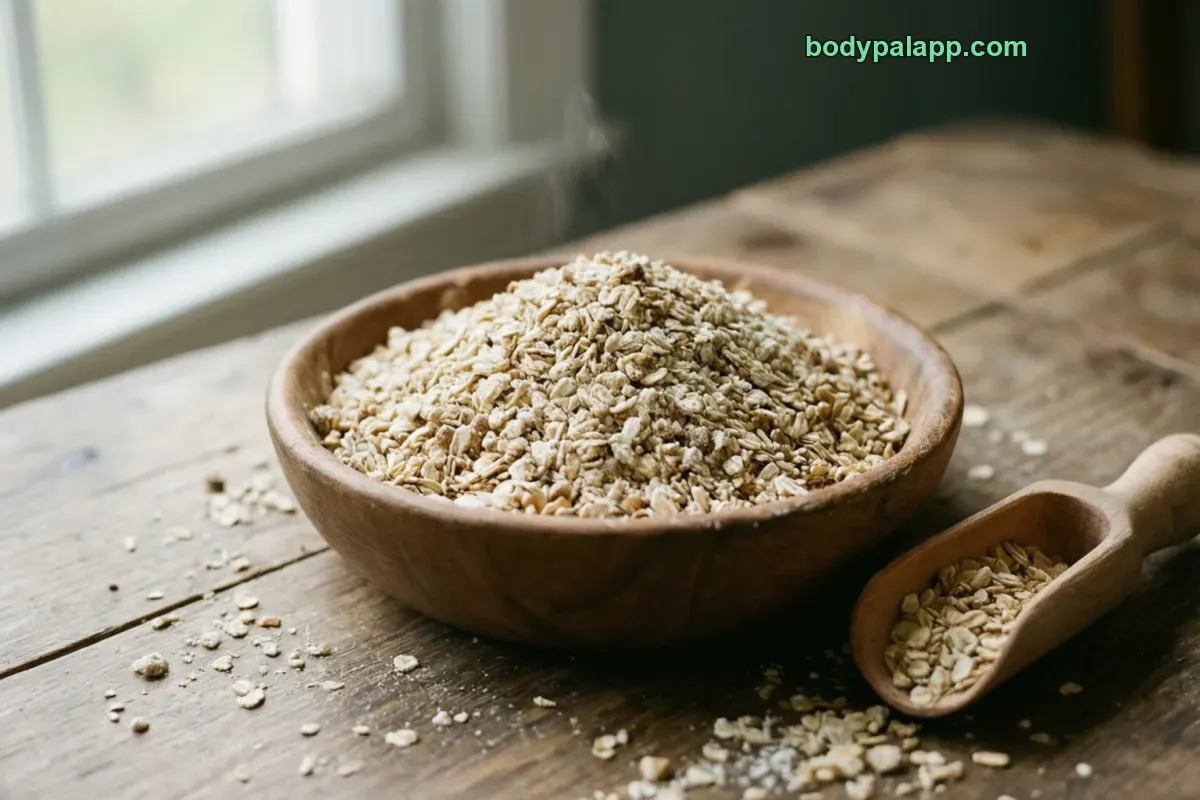
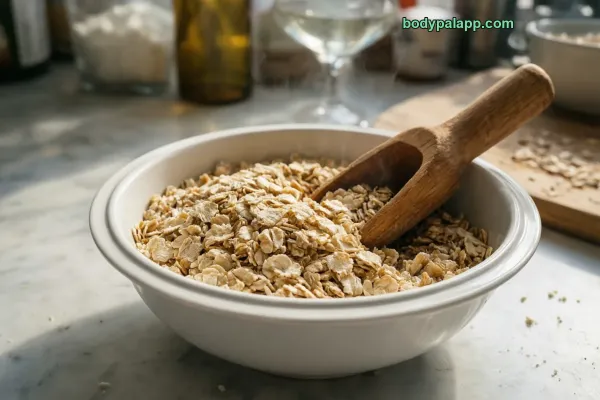
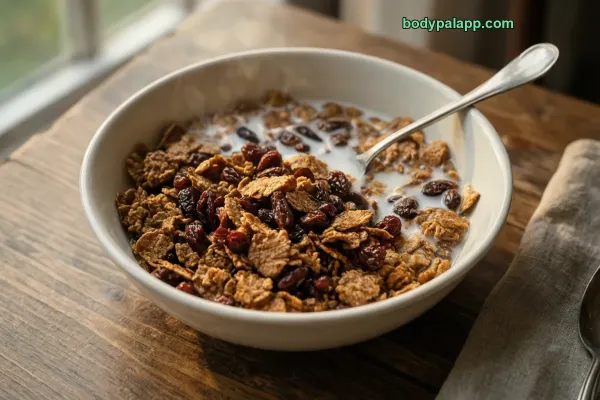
Here is how oat bran stacks up against rolled oats, oat flour and raisin bran, per 100 g and per usual serving.
Verdict: For the fewest calories per 100 g, pick oat bran at 246 over raisin bran at 324, rolled oats at 379 and oat flour at 404. Raisin bran also carries 382 mg of sodium per 100 g against 4 mg for oat bran, so oat bran is the better plain, low-sodium base.
Most popular oat bran brands in the United States
Ranked by popularity in the BodyPal database
# Productkcal / 100 g
1Bob's Red Mill Gluten Free Oat Bran1/3 cup · 40 g375 kcal
A cup of dry oat bran (94 g) has 231 calories. A cup of cooked oat bran (219 g) has 88 calories.
Is oat bran good for weight loss?
A cooked cup of oat bran is 88 calories with 5.7 g of fiber. Dry oat bran has 15.4 g of fiber per 100 g.
Oat bran vs rolled oats: which has fewer calories?
Per 100 g dry, oat bran has 246 calories and rolled oats have 379, a difference of 133 calories.
How much protein is in oat bran?
A cup of dry oat bran has 16.3 g of protein, or 17.3 g per 100 g. A cooked cup has 7.0 g.
How many calories are in a cup of cooked oat bran?
A cup of cooked oat bran (219 g) has 88 calories, with 7 g of protein, 25.1 g of carbs and 1.9 g of fat. Most of the weight is water, which is why it is far lower than a dry cup at 231.
How much fiber is in oat bran?
Oat bran has 15.4 g of fiber per 100 g and 14.5 g in a dry cup (94 g), roughly half the 28 g daily value. A cooked cup still provides 5.7 g of fiber.
Is oat bran high in sodium?
No. Oat bran has 4 mg of sodium per 100 g and 4 mg per dry cup, which is 0% of the 2300 mg daily value. Toppings and mixes are where sodium usually comes from.
Oat bran vs raisin bran: which has fewer calories?
Oat bran has fewer calories per 100 g: 246 versus 324 for raisin bran. Oat bran also has more protein, 17.3 g versus 7.6 g, and far less sodium, 4 mg versus 382 mg per 100 g.